
"coffee growing process"
20000 article(s) found

Coffee Tree species Segmentation Coffee planting Environment requires in-depth understanding of Coffee
One of the characteristics of a coffee tree is that its fruit can bear fruit several times a year, and another is that flowers and fruits (also known as cherries) coexist at different stages of ripening. The style of the whole coffee industry is influenced by the fickle nature. If the fruit is too ripe, the beans in it will rot. If it is not ripe enough, the beans picked will not ripen by themselves. So bean pickers
Introduction to the flavor of high-quality coffee beans in the manor characteristics of natural Ethiopian coffee fermented in the sun
Ethiopia has unique natural conditions suitable for growing all imaginable varieties of coffee. As a upland crop, Ethiopian coffee beans are mainly grown in areas between 1100 and 2300 meters above sea level, roughly distributed in southern Ethiopia. Deep soil, well drained soil, weakly acidic soil, laterite and soil are soft and contain

Ethiopian Coffee Manor Flavor description Grinding characteristics introduction to the taste price of varieties in producing areas
Ethiopian coffee beans grow in close to the natural environment, after years of planting under the same growth conditions, Ethiopian coffee beans have gradually adapted to the environment here. More than 60% of coffee beans are grown in forests or semi-forests. Large-scale coffee-growing villages account for about 35% of the country's total coffee production. Many of these are used.

Coffee growing areas in Rwanda introduce the treatment methods of high-quality coffee beans, the treatment method of Qimaier Village.
Rwanda has been growing coffee since colonial times. Although the crops are mainly coffee, the quality of coffee produced in Rwanda is not outstanding, and its status in the coffee world is low, and few people pay attention to it. Most of the coffee varieties grown in Rwanda are bourbon. Rwanda, known as the country of Thousand Hills, has a high-altitude mountain environment, fertile volcanic soil and abundant precipitation.

Introduction to the characteristics of Burundian Coffee Bean Flavor Manor growing Bourbon
Burundian coffee bears a striking resemblance to neighboring Rwanda, where coffee from the two countries is often confused. Burundian coffee is mainly grown in bourbon, with traditional wet processing of coffee cherries. Its boutique coffee is characterized by elegant sweetness and bright citrus aromas. This batch belongs to bourbon species micro batch. [Bulundi Champion processing Factory] is located in the card.

Taste characteristics of Ethiopian Coffee Manor Flavor description and introduction of varieties producing areas
Ethiopian coffee beans grow in close to the natural environment, after years of planting under the same growth conditions, Ethiopian coffee beans have gradually adapted to the environment here. More than 60% of coffee beans are grown in forests or semi-forests. Large-scale coffee-growing villages account for about 35% of the country's total coffee production. Many of these are used.

Rwanda coffee growing area Rwanda coffee processing Rwanda coffee farm
Professional coffee knowledge exchange More coffee bean information Please pay attention to coffee workshop (Weixin Official Accounts cafe_style) After separating from cherries, use water and tools like rake to classify beans one by one. After sorting, the beans are dried in the sun. Because beans are sensitive to moisture, the sudden wind signals rain, prompting workers to act immediately and

Coffee plant article coffee beans growing process when coffee flowers bloom?
Coffee plants: several to dozens of clusters in leaf axils, the second to fifth flowers on a flower axis. White, fragrant. The middle and small seeds have 5 petals, and the large seeds have 7 - 8 petals. Flowers tubular, terete. The stamen number is many and petal number is same, stamen stigma is bifid, ovary inferior, it is 2 rooms commonly, also have 1 room or 3 rooms. Insect-matchmaking flower, large seed and small seed

A brief introduction to the description of flavor, taste and aroma characteristics of Vietnamese boutique coffee beans
Vietnam's geographical location is very favorable for coffee cultivation. Southern Vietnam has a hot and humid tropical climate, which is suitable for growing ROBUSTA coffee, while the north is suitable for growing ARABICA coffee. Coffee production in Vietnam has the following characteristics: (1) because there is no effective way to deal with fallen leaves, medium-grain coffee was selected as the main variety in the early 1980s. (2) take planting technology as
Ethiopia Yega Sheffield Coffee Bean grows Raw Bean G2 Yega Chefe
Ethiopia has the longest history in the world, not only in coffee production and drinking, but also in the world. Most of the production is exported to advanced countries, and unlike other coffee-producing countries, 50% of the coffee produced in Ethiopia is consumed domestically. Nevertheless, more than 60% of Ethiopia's total foreign currency exports still come from the coffee trade, which is enough to replace

The process of making coffee from coffee trees to crushing-how to grow coffee trees in famine and shipwreck
The process of making coffee from coffee tree to squeeze-famine shipwreck coffee tree how to plant from harvest to delivery fruit harvest, must be the skin, pulp. The endocarp and silver peel are removed to form coffee beans. There are two kinds of methods: drying (natural drying, non-washing) and washing. Dry type, easy to operate, spread the harvested fruit on the dry ground and bask in the sun for a week or two

A brief introduction to the History and Culture of the Origin and Development of Vietnamese Fine Coffee beans
Vietnam's geographical location is very favorable for coffee cultivation. Southern Vietnam has a hot and humid tropical climate, which is suitable for growing ROBUSTA coffee, while the north is suitable for growing ARABICA coffee. Coffee production in Vietnam has the following characteristics: (1) because there is no effective way to deal with fallen leaves, medium-grain coffee was selected as the main variety in the early 1980s. (2) take planting technology as

Sharing the production process of coffee beans
It takes as long as 3-5 years for a coffee tree drama to steal and grow to a beautiful end. 6-10 years of coffee trees are the most likely to bear fruit, about 15-20 years, is a bumper harvest. Coffee trees are usually bred in nurseries and grow into saplings, and then moved to coffee farms a year later, completely following the way the Arabs planted and cultivated coffee trees at the time. In the first four or five years of the development of coffee trees, it will continue to go down.

Hawaiian coffee bean processing, characteristics of Hawaiian coffee
Follow the caf é (official Wechat account vdailycom) and found that the Beautiful Cafe has opened a small shop of its own, located in the southernmost area of Cau on the Big Island of Hawaii, and is the largest and most remote coffee farmer in Hawaii.
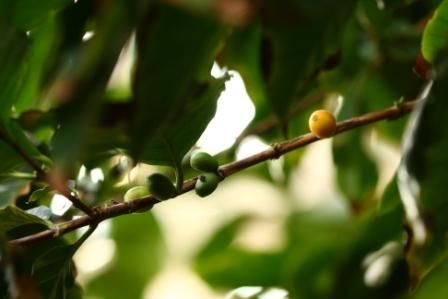
What conditions do you need to grow coffee trees? Introduction to the process from coffee tree planting to coffee bean harvest
Coffee is a perennial evergreen shrub or small tree of Rubiaceae. It is a horticultural perennial cash crop with the characteristics of fast growth, high yield, high value and wide market. The planting conditions of Coffee Coffee is a perennial evergreen shrub or small tree of Rubiaceae. It is a horticultural perennial cash crop with the characteristics of fast growth, high yield, high value and wide market. Wild
Coffee producing countries, regions and integration
Bolivian coffee variety: Arabian coffee production: 150.000 bags with snow-capped mountain terrain, vast plateau and tropical rain forest, Bolivia has ideal coffee production conditions. More than 90 per cent of the coffee produced in Bolivia is produced in high-temperature and humid climates, with elevations of 500 to 1600 metres above sea level in the tropics of La Paz. Another very important production area

How does Costa Rica process beans and how does it sift beans?
Professional coffee knowledge exchange More coffee bean information Please pay attention to coffee workshop (Weixin Official Accounts cafe_style) Costa Rican farmers have been growing high-quality Arabica coffee beans for generations. Over time, they have developed some of the best growing methods in the world, and they've been paying attention to changes in the coffee trees they grow; hand-picked coffee is Costa Rica.

Bolivia Coffee How to taste Growing environment Producing area Price Flavor Description Introduction
Arabica coffee cannot be grown at altitudes higher than 2000 meters, and if the altitude is too high, the coffee trees will freeze due to the low temperature. Bolivian coffee is mainly grown in the Yungas region northeast of La Paz. Bordering the Amazon River basin, it is about 1500-2500 meters above sea level and has an average annual temperature of about 10-15 ° C. Therefore, coffee growth is guaranteed.

Coffee is produced in Kilimanjaro, Tanzania
Coffee is one of the main cash crops in Tanzania, ranking fourth after cotton, tobacco and cashew nuts, mainly sold to Italy, Japan and the United States. Coffee exports play an important role in the national economy of Tanzania. Tanzania's main coffee producing area is located at the foot of Mount Kilimanjaro, which is rich in volcanic soil and coffee trees planted here.

Production and processing of coffee beans in Ethiopia
Ethiopia (Ethiopia) is one of the major producers of Arab coffee beans in Africa, producing the best Arab mocha beans in the world. It is said that coffee beans were first discovered by shepherds in the Kafa region of Ethiopia, and the name of coffee evolved from Kafa, so Ethiopia is still the hometown of coffee. Production and processing of coffee beans in Ethiopia